Last weekend I went to the LOTUS temple at Satchidananda Ashram in Yogaville, VA. At noon every day they have a thirty minute meditation in the main temple. Upon entering the shrine immediately feelings of peace and serenity wash over you.
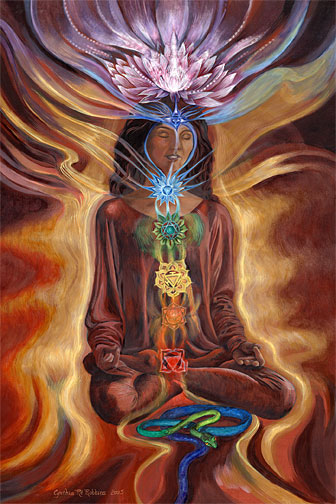 |
| The kundalini and chakras. |
"Just as in the human body there is the
kundalini—the spiritual energy that moves from the base of the spine through the
chakras (spiritual centers) to the top of the head, heralding spiritual realization—the energy of the LOTUS moves from the base of the foundation to the top spire. The two spiral staircases that wind upward from the ground level to the upper level of the sanctuary represent the
ida and
pingala, two of the subtle nerve channels. These channels crisscross the
sushumna—the third nerve channel that moves up the spinal column. At the points where they intersect, we find the
chakras, represented by
yantras within the LOTUS. The LOTUS has seven
yantras. The structure itself is a
yantra and it contains six more
yantras from the foundation up to the ceiling of the sanctuary—one above the other, all in line, going through the central core (
sushumna)." - LOTUS.org
 |
| This is the yantra in the foundation of LOTUS. |
At the center of the shrine, placed directly into the foundation there are crystals from all over the world, holy water and holy soil from all over the world, and a peace yantra. This yantra represents the root or
muladhara chakra.
 |
| "One World" |
|
|
|
|
Directly above the yantra in the foundation is the "One World" sculpture, which depicts all races, ages, and genders. Directly above that statue is another yantra, in the ceiling of the lobby- further carrying the energy from the foundation up into the main shrine. This yantra represents the
svadhisthana or second
chakra.
 |
| Yantra in the ceiling of the lobby. | |
|
|
 |
| The central altar. |
|
|
"Directly above the yantra is the main altar in the temple. Inside the altar is an embedded yantra, it represents the third or
manipura chakra. This chakra is the power center of the body, just as it is the core of the altar. The altar itself represents the fourth or
anahata chakra representing the heart center. Erupting out of the altar is a beam of lightUpstairs, on the sanctuary level of the Shrine
is the third
yantra (also in line with this central core) which is embedded inside the center altar. This
yantra represents the
manipura chakra, the power center (fire). The fourth
yantra is in the form of the center altar that holds the central light. This is the fourth
chakra, the
anahata or heart center (air). The outer gates of the
yantra are open and represent the infinite nature of God’s manifestation; the three
gunas (elements of nature) are represented by the circles on the central altar in stone. The black carved granite star holds live flames (fire). The
bindu (dot in the center of the
yantra) is the central light in the sanctuary. It is moving energy, filled with a liquid containing bubbles that rise to the top of the dome through the air element. This shows us the path our lives should take—if we can move toward higher aspirations, our lives will be more peaceful and, thus, inspiring to others." - Lotus.org

The beam of light goes through the fifth yantra (representing
prana and
apana or the flow of upward and downward energy) in the ceiling and erupts. The beams of light descending down to individual shrines for the different religions of the world.
The sixth chakra or
ajna is represented by the circular clerestory of windows. The seventh and final chakra (
sahasrara) is represented by the spire on top of the temple, radiating the energy out and into the world.

This is an arial view of the shrine, you can see the yantra symmetry in the entire design.
The entire temple radiates with a sacred energy, that encompasses anyone who visits it. Its sacred architecture further enhances the amazing spiritual energy present.
All information derived from LOTUS.org and personal tours/visits of
Satchidananda Ashram, Yogavile, VA.


